In this guide, we'll explore the pastry baking methods professionals rely on to achieve stunning, consistent outcomes. You'll learn the essential skills that truly make a difference, from cold-butter techniques to the art of lamination.
Understanding the fundamentals of pastry baking
To succeed, you need to understand the fundamental building blocks, including temperature, timing and ingredient ratios.
Temperature control matters
Cold ingredients, especially butter, play a key role in building structure and texture. For flaky pastries such as pie crust or puff pastry, the butter must remain solid while mixing and only melt in the oven. This is what creates distinct, airy layers. Chilling the dough also relaxes the gluten, helping prevent shrinkage and promoting even baking.
Your oven temperature is equally important. If it runs too hot, it can brown the exterior before the inside is cooked through. If it’s too cool, you risk soggy, underbaked pastry. Always use an oven thermometer to verify accuracy, as oven calibration can vary, especially in commercial kitchens.
Resting and proofing are essential
Dough needs time to rest. For shortcrust and laminated doughs, resting helps prevent shrinkage and allows ingredients to bind properly. In choux or yeast-based doughs, proofing activates the leavening agents, enabling air pockets to form and create lift. Skipping these steps results in dense, uneven bakes.
Proofing time also depends on your environment. A warm, humid kitchen will yield different results than a cool, dry one. Professional bakers often use proofing cabinets or climate-controlled setups to keep this process consistent.
Ingredient ratios define texture
Pastry is all about balance. A slight change in the ratio of dry ingredients to fat can turn a shortcrust dough into a crumble. More butter adds richness, but too much can weaken structure. Sugar affects browning and moisture, while eggs influence elasticity and color.
Understanding how ingredients interact is essential. A strong foundation in the science of baking helps you grasp how textures develop, why some pastries brown beautifully thanks to the Maillard reaction and what adjustments to make when your results fall short.
Laminated dough and puff pastry techniques
One of the most admired pastry techniques, laminating creates the crisp, flaky texture found in croissants, palmiers and Danish pastries. It involves folding layers of butter into dough multiple times, with careful resting between each fold.
What is lamination?
It is the process of encasing cold butter in dough and folding it repeatedly to create layers. The result is a light, airy pastry that shatters when bitten yet holds its shape beautifully.
To achieve this, the butter block and dough must be at the same temperature and firm but pliable. If the butter is too cold and breaks, layers will be uneven. If it melts, the dough becomes greasy and dense.
Folding and resting cycles
Laminated dough must rest between folds to relax the gluten and prevent shrinkage during baking. Professionals use folding techniques such as single (letter) and double (book) folds to build even layers.
Chilling the dough between folds helps keep the butter solid and the structure intact, especially in warm kitchens. Many pastry chefs use a sheeter or cross-rolling machine to maintain consistent thickness and avoid tearing.
Common mistakes to avoid
Laminated dough is sensitive to technique and environment. Too much flour during rolling can dry out the dough, while too little can cause sticking and tearing. Always brush off excess flour between folds.
A warm kitchen is another challenge. If you don’t have a climate-controlled space, like those found in professional bakeries, chill your rolling pin and work in short sessions, returning the dough to the fridge as needed.
Finally, improper shaping can affect rise. For example, croissants rolled too tightly will trap steam, preventing the layers from separating properly.
Shortcrust, pâte sucrée and pâte sablée
Understanding different types of pastry dough helps you choose the right method for every bake. While the ingredients may seem similar, each dough produces a distinct texture and finish.
Texture, fat content and best uses
Below is a breakdown of the most commonly used varieties:
- Shortcrust pastry: known for its crumbly, tender texture. Commonly used for meat pies, tarts and quiches. Its high fat content coats the flour, reducing gluten development and creating a delicate bite
- Pâte sucrée: a sweet dough with a firmer texture, ideal for fruit-based desserts. Made using the creaming method, where butter and sugar are mixed first, resulting in a defined shape and cleaner structure once baked
- Pâte sablée: a richer dough with extra egg yolks and a slightly sandier texture. Perfect for miniature tartlets and petit fours. Less forgiving than shortcrust, but when handled correctly, it delivers a melt-in-the-mouth finish
These doughs are commonly taught in formal baking and pastry arts courses, such as the Bachelor in French Pastry Arts. Students learn how to make them and when and why to choose one over another.
When blind baking makes a difference
This process is essential when the filling cooks faster than the crust. It helps keep the pastry base crisp and prevents sogginess, especially important for pies with wet fillings or delicate creams.
To blind bake properly:
- Line the pastry shell with parchment paper
- Fill it with pie weights or dried beans to hold its shape
- Remove the weights partway through baking so the base can firm up and finish evenly
This technique is a key part of professional pastry making, ensuring stable layers and a polished presentation.
Avoiding shrinkage and soggy bottoms
Nothing ruins a tart like a shrunken shell or damp crust. To avoid this, always rest your dough before and after lining the tin. Chilling helps relax the gluten, making the dough easier to shape and less likely to shrink.
Overstretching the dough is another common pitfall. Instead of pulling or pressing it into the tin, gently ease it into place. These small but essential steps are among the many French cooking techniques, where attention to detail and precision are key to achieving flawless pastry.
Choux pastry perfection
Unlike layered doughs or shortcrusts, choux pastry rises because of steam, not chemical leavening. The technique may look simple, but it’s all about timing, moisture and precision.
Steam-powered rise and the role of moisture
Choux dough is first cooked on the stovetop, then mixed with eggs to develop elasticity and the ability to trap steam during baking. That trapped steam is what gives choux its signature puff.
Moisture level is critical. If the dough is too dry, the pastry won’t rise; too wet and it won’t hold its shape. If you want consistent results, you need to understand how your oven behaves and how heat drives structure through evaporation.
Getting this right takes practice and, more often than not, access to commercial baking equipment with precise temperature control. However, even in home kitchens, close attention to detail and foundational chef skills can yield excellent results.
Perfect piping and even spacing
The quality of the dough and how it's piped and spaced can all affect the outcome when making choux pastry. For best results, keep these piping tips in mind:
- Use a piping bag fitted with a round tip to create uniform, professional-looking shapes
- Hold the bag vertically and apply steady pressure to ensure even rising
- Leave enough space between each piped round to allow for steam expansion and prevent sticking
- Smooth any peaks with a damp fingertip before baking
Techniques for fillings and finishes
Inside the pastry lies another world of flavor and texture. A smooth, well-executed filling can elevate even the simplest tart and knowing when and how to add it can make or break the final result.
Pastry cream, ganache, mousseline
Several classic fillings form the foundation of advanced pastry work. Each one requires specific techniques to get the right consistency, flavor and finish:
- Pastry cream: a rich custard base thickened with egg yolks and starch. It must be stirred constantly with a rubber spatula to prevent lumps or curdling
- Ganache: typically made with cream and chocolate, creating a glossy, pourable filling or topping
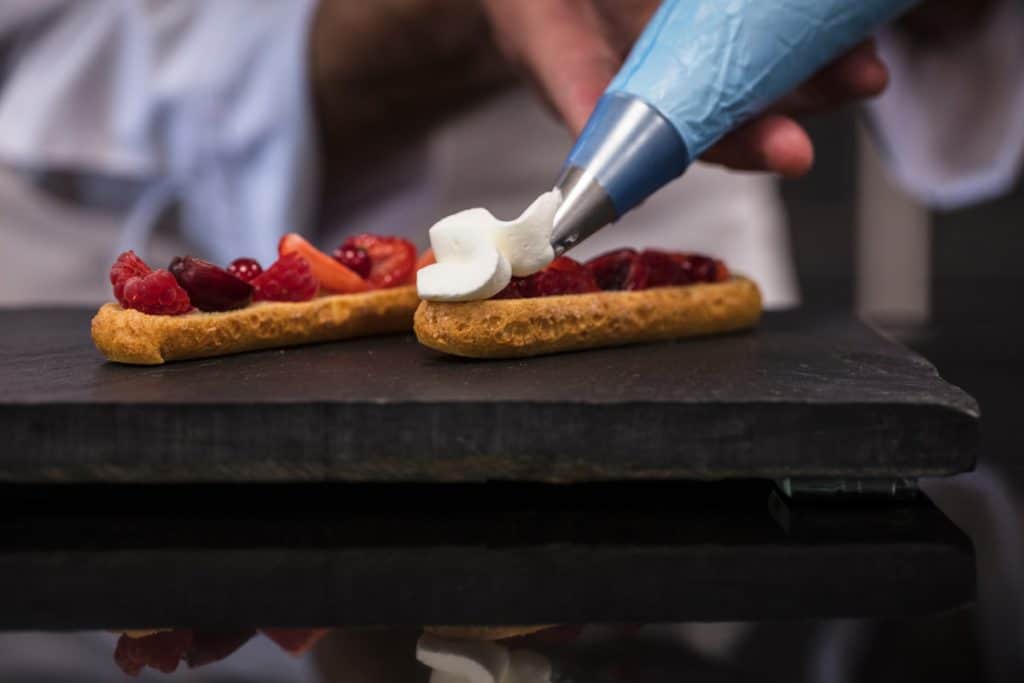
- Mousseline: a lighter filling that combines pastry cream with butter, making it ideal for piping or layering
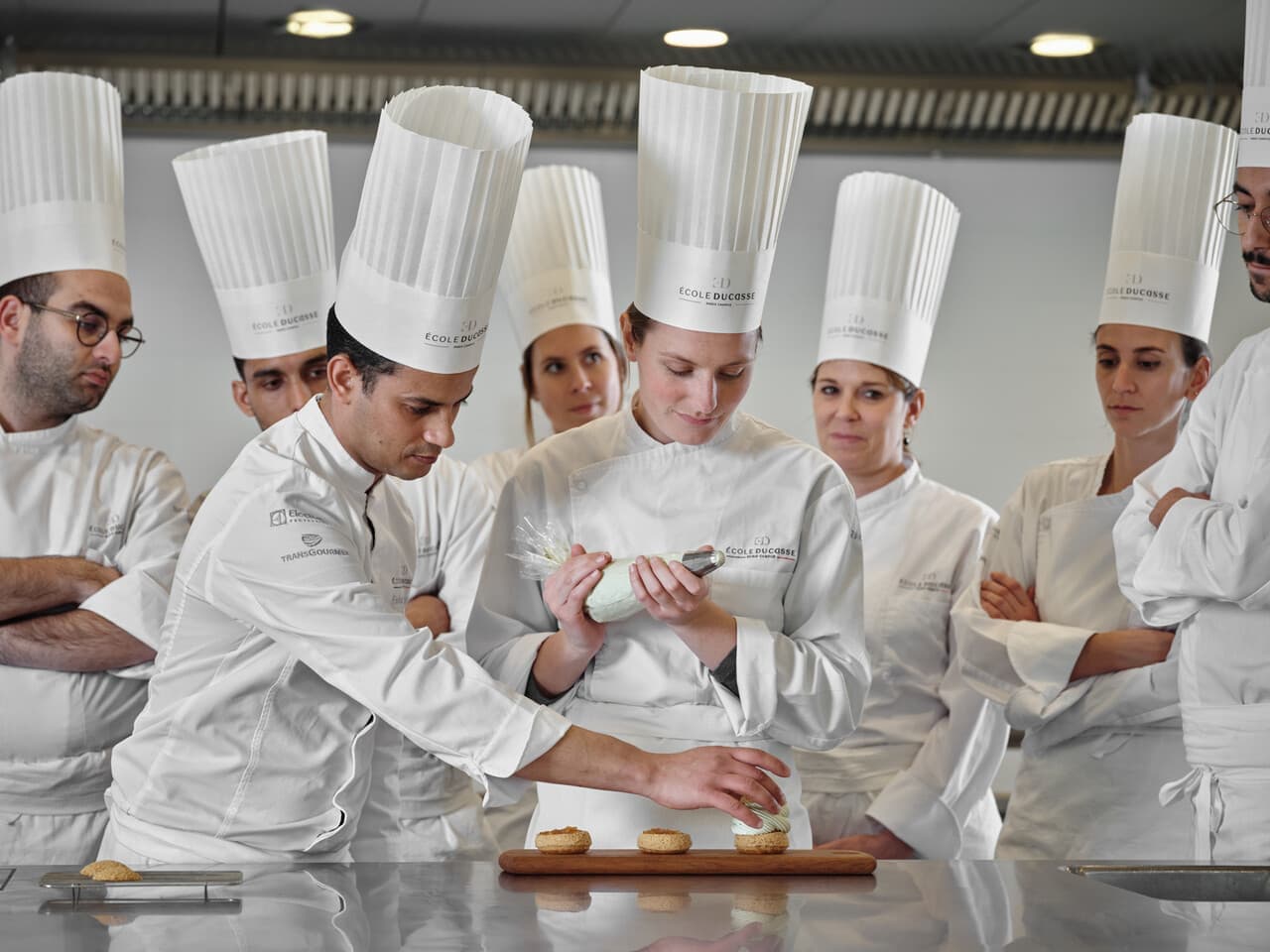
These fillings and finishes are topics covered in École Ducasse’s Higher Diploma in Pastry Arts, which focuses on mastering classic and advanced pastry techniques.
Egg washes, glazes and timing
An egg wash before baking gives pastry a golden, glossy finish, while a fruit glaze applied after baking protects the surface and extends shelf life. Both serve aesthetic and functional purposes, but timing is key. Apply a wash too early and it can burn; too late and it may not set properly.
In more delicate desserts, knowing how to balance fillings and finishes is a crucial aspect of professional pastry work. These details are essential for creating baked goods that taste exceptional but also hold up during service and transport.
Advanced techniques and presentation
Once the fundamentals are in place, pastry becomes an art form. At the professional level, presentation, taste, texture and structure all play a part in the final dish.
Sugar work, tempered chocolate and showpieces
Decorative techniques elevate your creations to another level. But such techniques, including working with tempered chocolate, isomalt or pulled sugar, require precision and focus. These media are highly temperature-sensitive; a single mistake can undo hours of preparation.
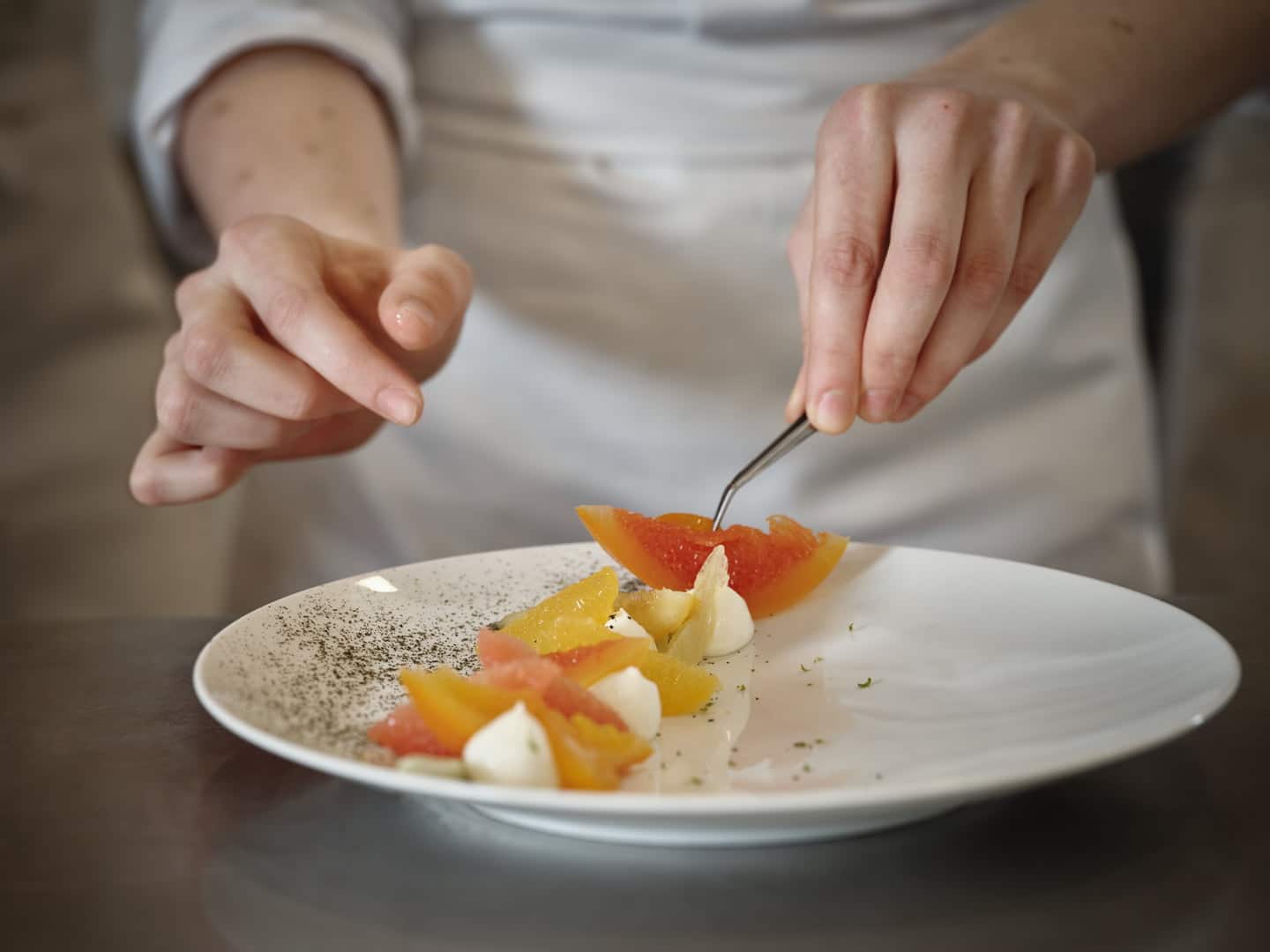
Visual storytelling is central to professional pastry. Ornamental elements such as spirals, curls and cages bring height, drama and textural contrast. In plated desserts, this contrast improves balance and can transform a simple tart into a dish that tells a story. Color palette, height, garnishes and even negative space on the plate have to be designed thoughtfully. That’s why these techniques are often a core part of advanced culinary arts degrees.
The role of flavor layering
Great pastries can integrate sweetness, acidity, bitterness, salt and spice, all within one dish. Think of a dark chocolate tart with sea salt and chilli or a spiced apple compote with ginger crumble and vanilla cream.
Where to learn professional pastry baking
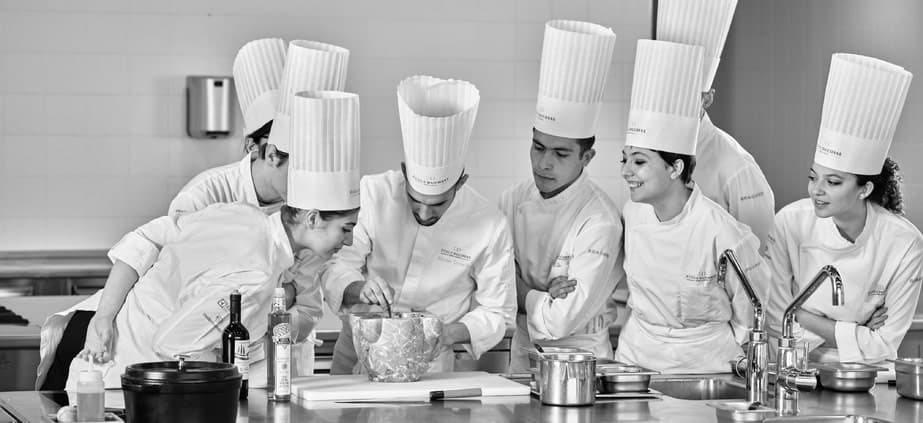
Formal education, whether at a culinary school in France or through an online pastry program, can accelerate your pastry journey. It teaches foundational techniques, corrects mistakes early and gives you daily practice under expert supervision, saving you years of trial and error.
Benefits of structured training
Formal education lays the foundation for technical mastery and professional growth. Key benefits include:
- Mastery of techniques: learn foundational and advanced pastry skills in a structured environment
- Expert guidance: receive consistent feedback and instruction from experienced professionals
- Professional tools: work with industry-standard equipment and ingredients
- Efficiency skills: improve time management and workflow in a professional kitchen setting
- Creative development: explore artistic expression within a disciplined framework
- Networking opportunities: connect with peers, mentors, entrepreneurs and industry contacts
- Career advancement: boost credentials with recognized certifications and training experience
Real-world training and mentorship
Through internships or in-house production labs, students gain first-hand exposure to the pace, pressure and standards of the professional kitchen. This allows them to apply classroom knowledge in a practical setting, sharpening their technical skills while developing essential traits such as teamwork, adaptability and time management.
Mentorship adds another powerful dimension. By working closely with experienced pastry chefs, students receive personalized guidance, constructive feedback and industry insights that can’t be found in textbooks. Many mentors become long-term professional connections, shaping a student’s style, confidence and career direction as a chef.
Conclusion: mastery through method
Precision. Practice. Patience. These are the traits of great pastry chefs and the foundation of every successful bake. Mastering the methods behind each iconic recipe is essential because every technique builds on the one before it, from dough handling to baking precision and fillings to final finishes.
With commitment, curiosity and the right training, anyone can move beyond the basics to create pastry that’s beautiful and professionally refined.