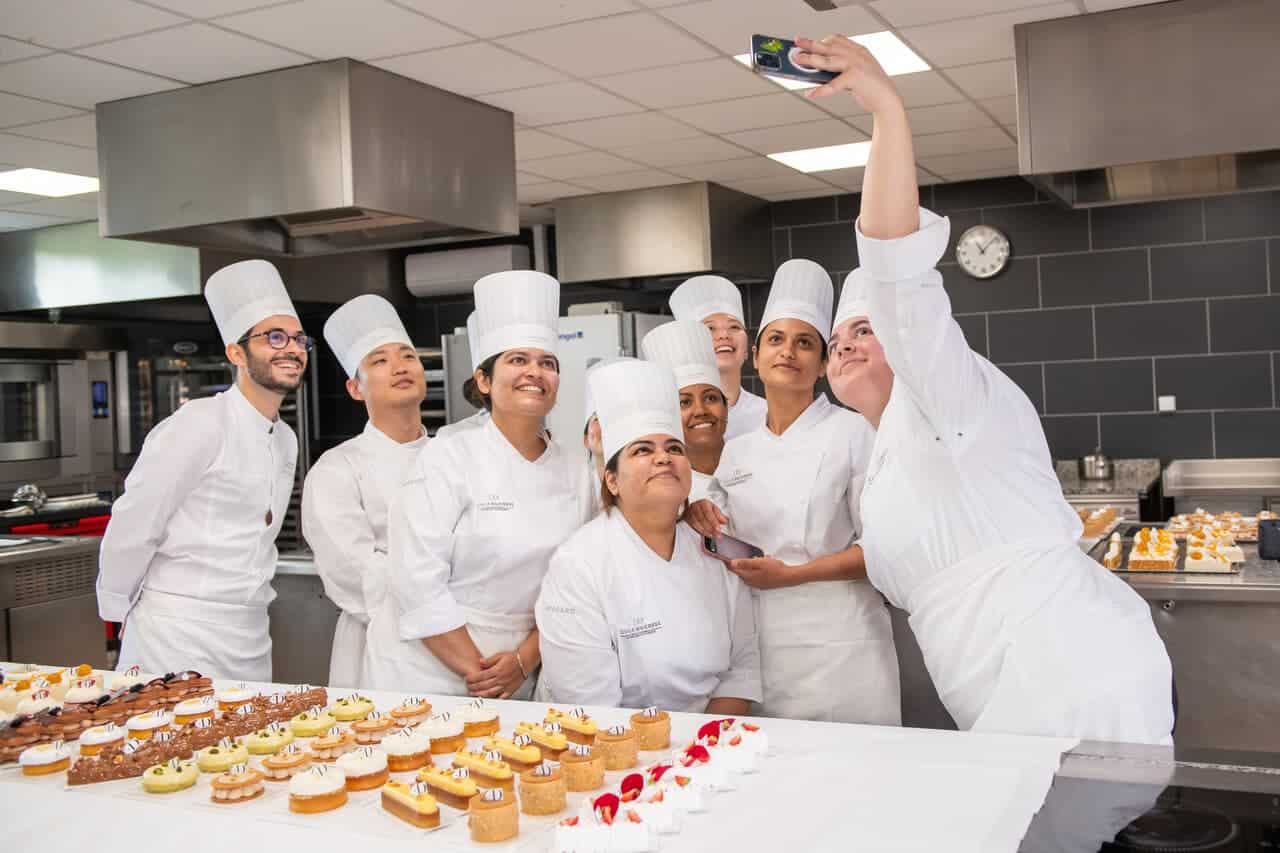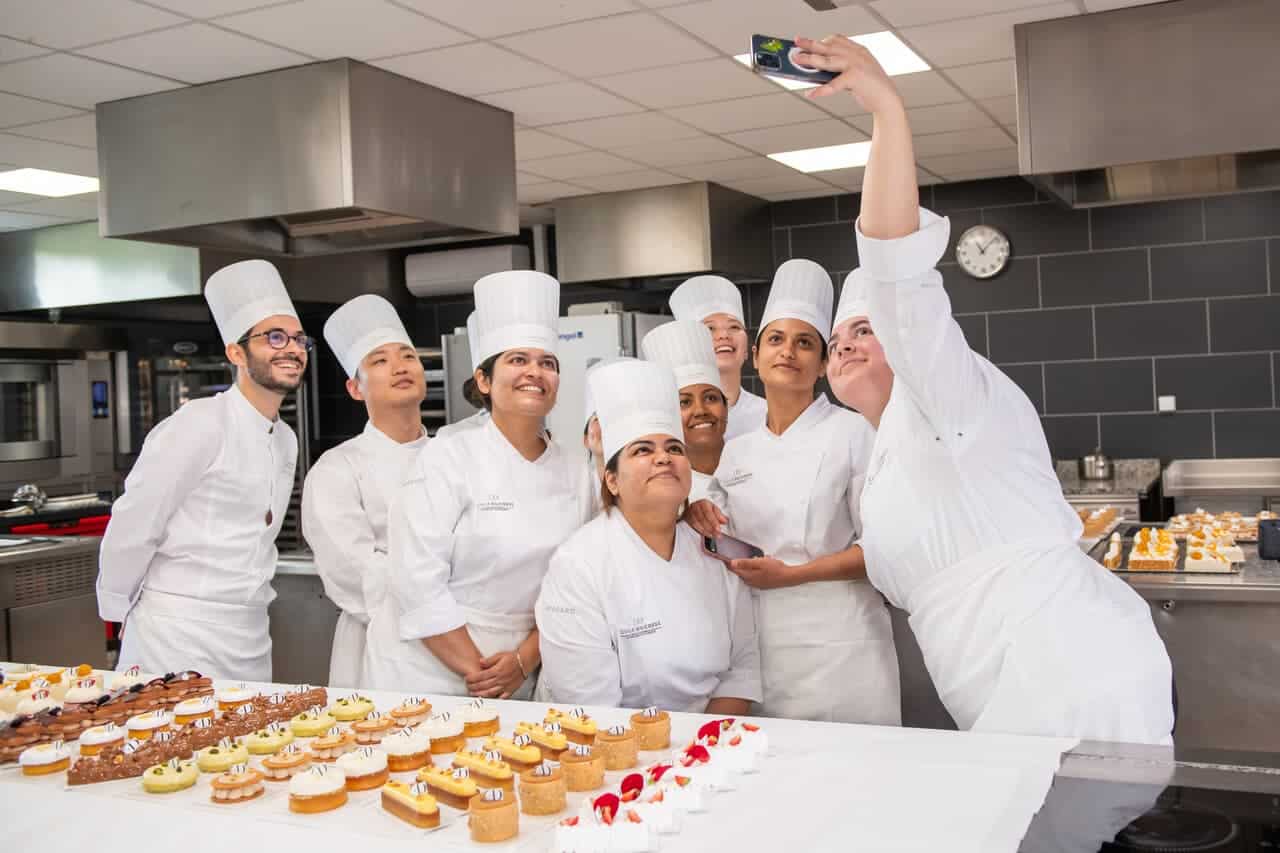
At the leading culinary arts school, École Ducasse, life as a pastry student means immersing yourself in the traditions of French savoir-faire while preparing for a career path that is increasingly global and highly rewarding.
From early-morning practice in state-of-the-art kitchen labs to afternoon workshops testing new techniques, days are structured around learning by doing. Training develops intuition, discipline and creativity, skills that prepare you for leadership roles in an industry that values tradition and innovation. This guide offers a glimpse into the daily life of a pastry student, giving you a clear idea of what to expect when you enroll.
A day in the life of a pastry student
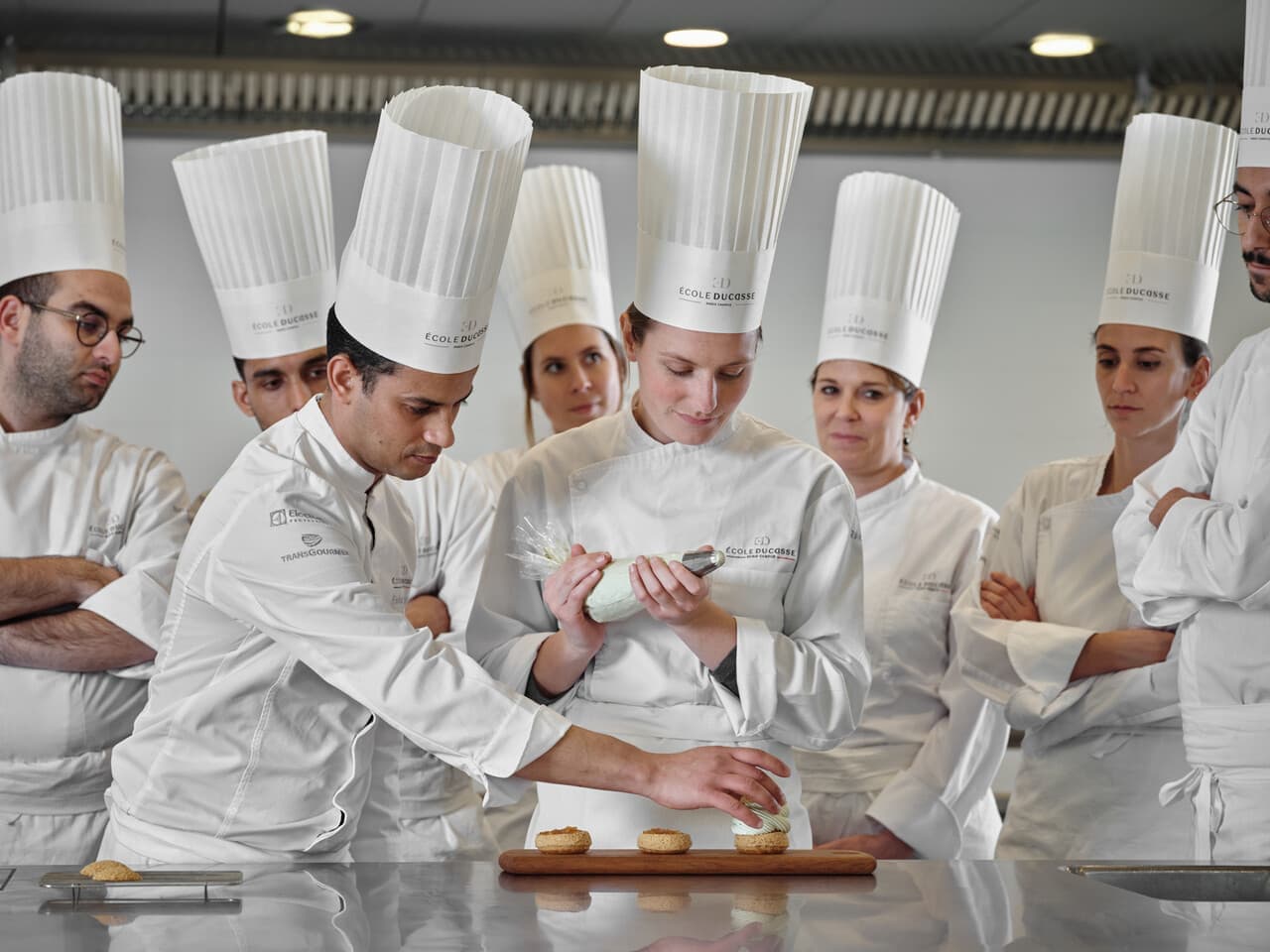
The rhythm of life at École Ducasse revolves around the kitchen. Mornings begin early, with students stepping into pristine labs where marble counters are lined with gleaming tools and mise en place is neatly arranged. Under the guidance of world-class chef-instructors, students spend hours perfecting techniques that form the foundation of professional pastry work: lamination for crisp croissants, tempering chocolate for flawless shine or pulling sugar to create delicate showpieces.
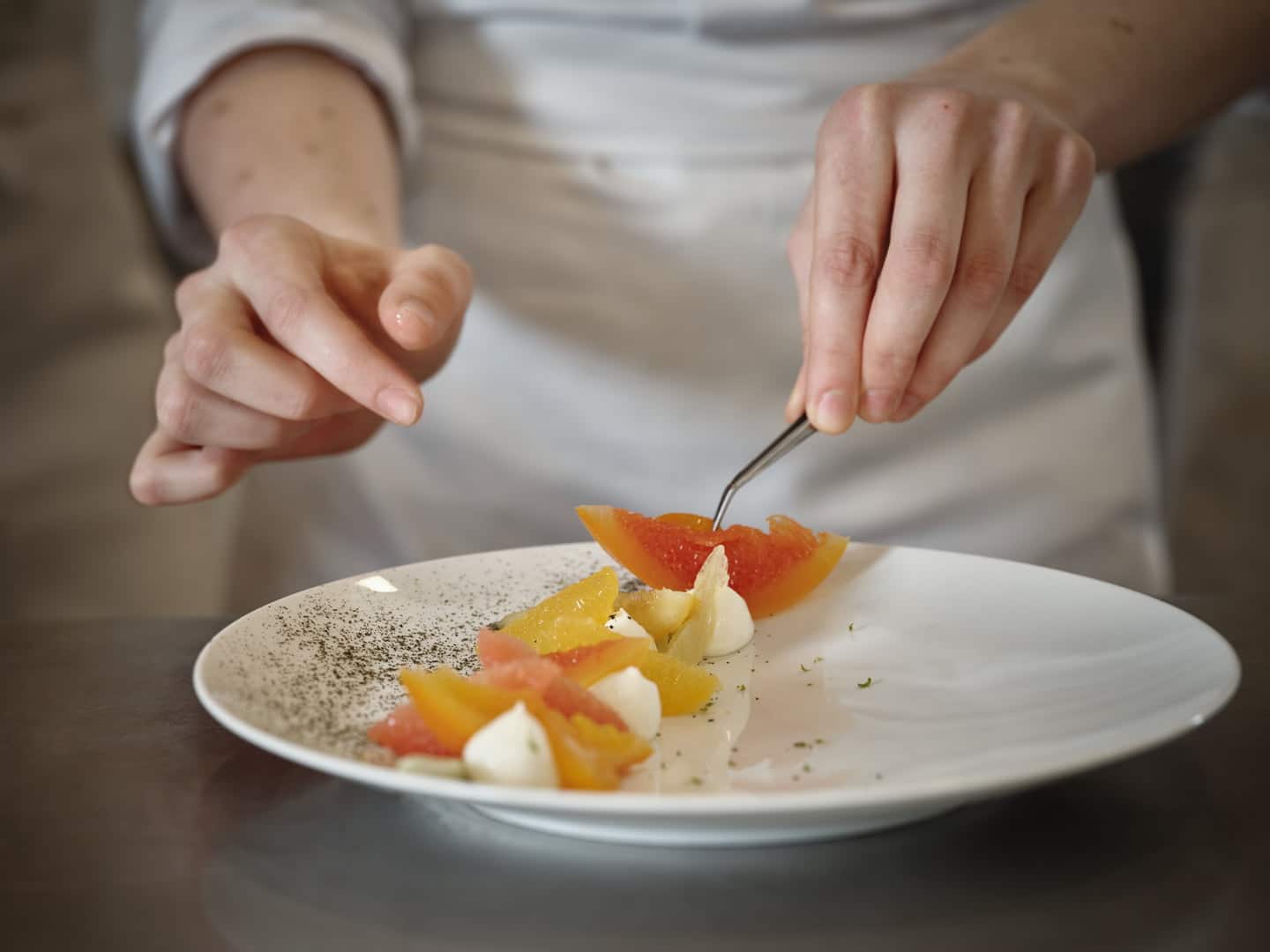
Afternoons shift focus to creativity and exploration. Workshops may include developing a plated dessert inspired by seasonal produce, testing a vegan mousse formula or experimenting with natural sweeteners as part of a healthier approach to indulgence. Each session strikes a balance between technical skills and opportunities for innovation, encouraging students to push their boundaries while remaining grounded in classical principles.
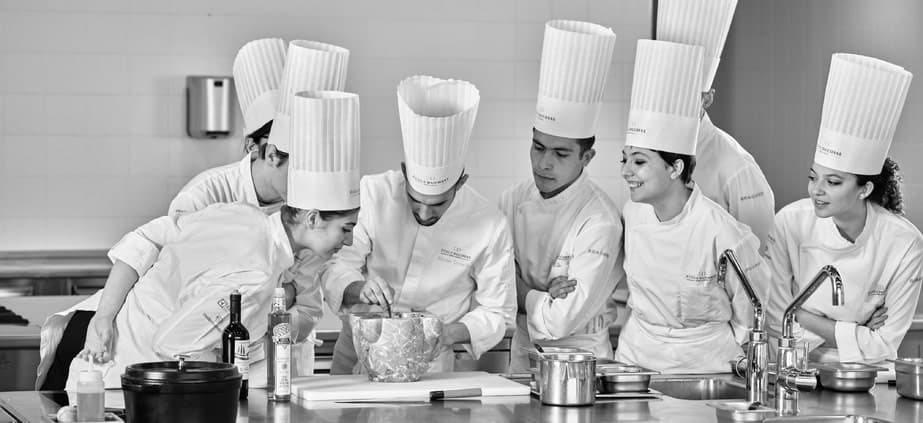
Outside the kitchen, collaboration plays a central role. Each week, one student steps into the role of sous chef, coordinating tasks and ensuring organisation and cleanliness meet professional standards. Pastry students also work in teams on group projects that simulate real-world foodservice operations. You might spend an evening designing a full dessert menu, mapping out ingredient sourcing, cost control and presentation aesthetics. These shared challenges create bonds that often last well beyond graduation, laying the foundation for future professional networks.
Student life also includes campus-led events, guest chef demonstrations and opportunities to meet suppliers and industry leaders. Students can also enjoy the campus boutique, where freshly made viennoiserie and coffee are available using a prepaid card system. At École Ducasse, every day brings new ways to connect with the wider pastry industry.
Hands-on training with world-class chefs
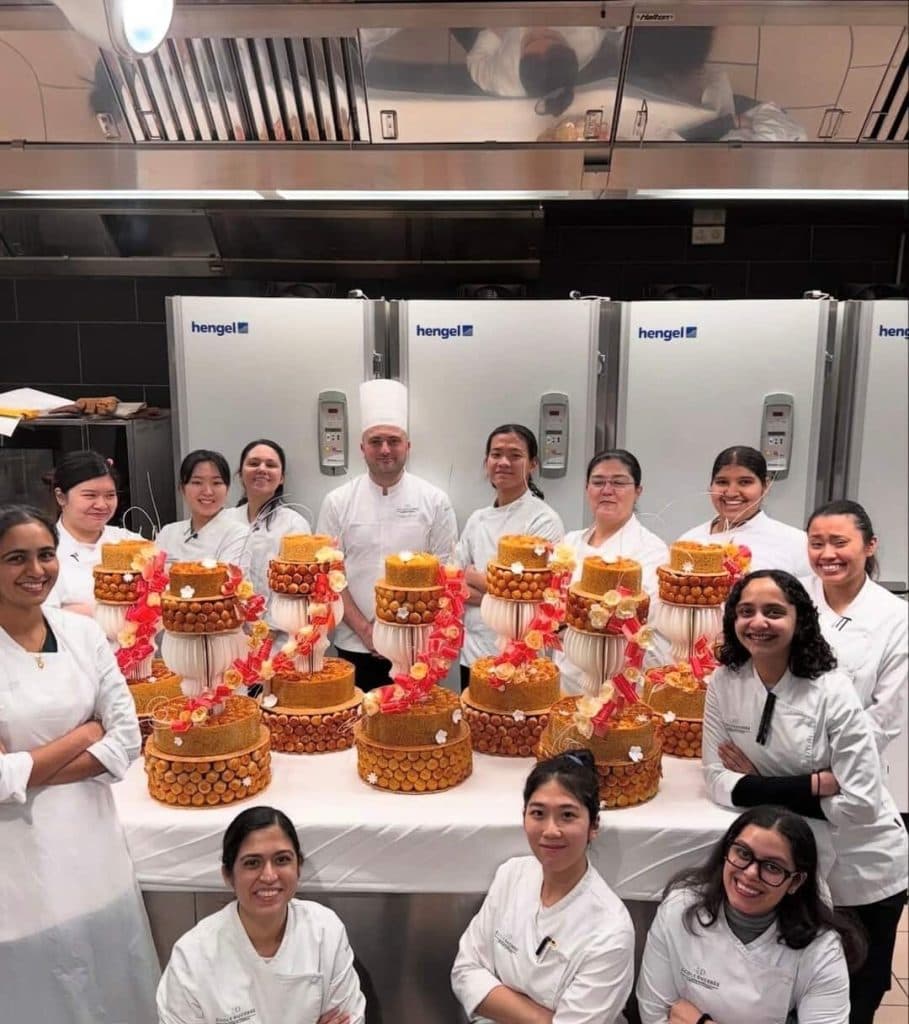
The heart of the École Ducasse experience is its emphasis on practical learning. Students watch, practice, refine and repeat under the guidance of instructors who bring years of expertise from Michelin-starred kitchens and prestigious international competitions.
Training is led by Meilleurs Ouvriers de France, an elite title awarded to artisans at the very top of their craft. Working alongside them gives you direct insight into Alain Ducasse’s pastry philosophy, which focuses on respect for ingredients, precision and sustainability. Classes are kept small to allow personalized feedback, so every detail, from sugar crystallisation to puff pastry lamination, is reviewed closely.
For aspiring professionals, this approach builds confidence and prepares you for the realities of professional pastry kitchens, where consistency and timing define success. You learn what to do and why it works, developing instincts that recipes alone can’t teach.
Learning French savoir-faire and modern innovation
French pastry traditions are admired worldwide for their precision and artistry and they form the backbone of École Ducasse’s culinary education. Students study the techniques behind timeless classics such as pâte à choux, mille-feuille and ganache, gaining a deep respect for the craft’s heritage.
But life as a pastry student in France is also about looking forward. Modern courses weave innovation into the curriculum, exposing students to trends reshaping the pastry industry such as:
- Health-conscious desserts with reduced sugar and natural alternatives
- Sustainable sourcing, from fair-trade chocolate to zero-waste baking
- Experimental textures and forms inspired by molecular gastronomy
This balance between legacy and creativity is what makes École Ducasse graduates highly sought after in global kitchens. You leave with the skills to master classic recipes and the confidence to reimagine them for contemporary tastes.
International perspectives in the classroom
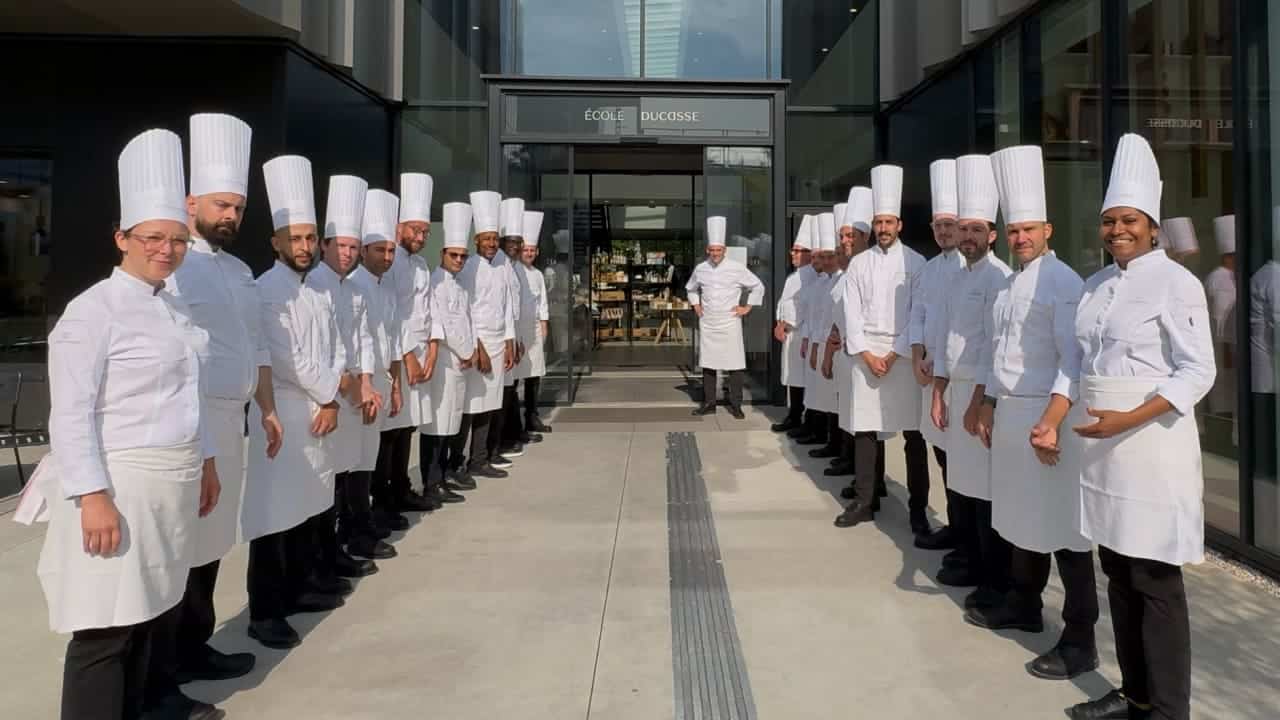
With students joining from more than 60 countries, École Ducasse offers a truly global learning environment. Life as an international pastry student means sharing ideas, recipes and cultural traditions with peers who bring unique perspectives from around the world.
This diversity develops creativity and builds global networks that often turn into professional collaborations later in your career. You might work alongside a classmate from Japan, perfecting matcha entremets in the morning, then learn from a Mexican colleague about the role of native cacao in pastry culture during an afternoon workshop.
Adapting to life in France is also part of the experience. Language immersion, navigating local markets and learning the cultural nuances of dining etiquette all deepen your understanding of French savoir-faire. These elements shape your technical skills and your identity as a pastry professional.
Beyond the kitchen: preparing for your career
At École Ducasse, students are trained so they can handle every aspect of life in the hospitality industry. As well as baking and pastry arts education, students gain an understanding of foodservice operations, menu costing, supply chain management, financial planning and team leadership.
Programs integrate business fundamentals into their technical curricula. For example, you might design a dessert menu for a mock pastry shop, calculate margins for each item and create a production workflow that balances creativity with efficiency.
Practical work experience is central to the training. Every student undertakes an externship in a professional kitchen, often in high-end restaurants, luxury hotels or internationally renowned pâtisseries. These placements allow you to refine your pastry techniques under pressure, from coordinating plating during busy lunch shifts to adapting when ingredients run out mid service.
By graduation, students have developed refined pastry skills, which are supported by the job placement assistance and industry connections they need to launch their careers.
Entrepreneurial pathways for pastry professionals
Not every graduate follows the same pastry career path. Some dream of running a pastry shop, boutique bakery or café; others aspire to develop artisanal product lines or work as consultants for luxury brands and hotels.
Courses at École Ducasse reflect these possibilities by integrating business planning, marketing and food entrepreneurship into the curriculum. Students work through projects that mirror real-world scenarios, such as developing a business concept, designing packaging for baked goods and creating a financial model to attract investors.
Some programs even introduce students to AI-powered business simulations, which help future entrepreneurs explore different pricing strategies, supply chain decisions and sustainability models before committing to real-world resources.
For graduates eager to forge their own path, this blend of technical expertise and strategic vision offers a competitive advantage in a rapidly evolving pastry industry.
Immersive learning beyond the classroom
Students at École Ducasse take part in industry field trips to local producers, artisan chocolatiers, culinary markets and sustainable farms. These experiences deepen their understanding of ingredients and connect them directly to the people shaping today’s culinary arts.
You might visit a renowned butter producer to understand the science behind texture, meet a farmer experimenting with heritage grains or tour a bean-to-bar chocolate workshop to study roasting profiles. Every field trip reinforces the idea that great pastry begins long before the oven.
On campus, regular guest lectures bring inspiration from industry icons such as Pierre Hermé and Massimo Bottura, as well as James Beard Award–winning chefs. Whether discussing sugar-sculpting trends or the business of luxury desserts, these sessions offer direct insight into the realities of professional pastry kitchens.
Global networks and international opportunities
Life as a pastry student also enables you to become part of a global alumni network. École Ducasse graduates work across top-tier restaurants, luxury resorts, fine dining establishments, culinary schools and artisanal bakeries in more than 90 countries worldwide.
Through collaborative projects, virtual masterclasses and internship placements, students gain exposure to different culinary cultures and practices. You might spend a semester learning chocolate tempering techniques in France before completing your externship at a pastry school in Tokyo or a boutique bakery café in New York City.
This international perspective prepares graduates to lead in an industry where creativity and adaptability are just as important as technical skill.
Sustainability at the heart of pastry education
Now central to modern culinary education, eco-conscious practices are now directly integrated into training at École Ducasse. Students learn how to minimize waste, source responsibly and balance indulgence with environmental impact.
Lessons may include working with alternative proteins, plant-based ingredients and regenerative agriculture models to design desserts that meet culinary and ecological goals. Connected kitchen tools track energy consumption, water usage and food waste during practice sessions, helping students make data-driven adjustments that reduce their footprint without compromising quality.
This hands-on sustainability training equips graduates to meet growing expectations from consumers and employers who increasingly prioritize eco-friendly practices across the hospitality industry.
Human mentorship remains at the core
Even as technology and innovation are reshaping pastry education, one principle remains unchanged: the craft is still passed from person to person. Working alongside instructors allows students to refine their instincts, absorb subtle techniques and develop confidence that no textbook or dashboard can replace.
Students learn just as much from each other, swapping tips during late-night plated dessert practice sessions or teaming up on sugar-sculpting challenges. This sense of community defines life as a pastry student, providing professional collaboration and personal support.
Your future in the pastry world
Graduates of École Ducasse leave prepared for a range of roles in the pastry industry. Some become pastry chefs in fine dining restaurants, others specialize in baking arts, chocolate work or wedding cake design. Increasingly, alumni move into adjacent fields such as food styling, culinary media and product innovation.
With business skills and practical training built into the curriculum, along with opportunities to develop professional networks, you will graduate ready to pursue your career in many different directions. Whether you want to open your own pâtisserie, lead a luxury hotel pastry team or develop a sustainable product line, École Ducasse provides the foundation to make it happen.
Conclusion
Life as a pastry student at École Ducasse is a deeply immersive journey into the heart of French pastry tradition, combined with the innovation driving the industry today. Through baking and pastry arts training, mentorship from world-class chef instructors and exposure to cutting-edge culinary techniques, students gain the confidence and creativity to thrive on the international stage.
Whether your goal is to become a pastry chef in a prestigious kitchen, launch your own artisan bakery or specialize in plated desserts, wedding cakes or chocolate work, École Ducasse equips you with the technical mastery and business acumen to succeed.
By learning about all aspects of patisserie, from mise en place and menu development to food safety and pastry techniques, you’ll leave prepared for a sustainable, rewarding career If you’re ready to turn your love of pastry into a profession, the next step is here.