In this guide, we’ll explore iconic French pastries, time-honoured recipes and the chefs whose innovations helped bring these delicacies to global fame. Whether you're passionate about baking or pursuing a culinary career, understanding classic French pastries and appreciating the elegance that defines French dessert culture are vital if you want to master pâtisserie.
What makes French pastry unique?
French pastry is known for its precision, artistry, and deep connection to traditional French cooking techniques. While its origins go back to medieval baking guilds, the refined pastries we recognize today took shape in the 17th and 18th centuries and continue to reflect a commitment to craftsmanship.
Quality butter is a defining ingredient, adding richness and texture to everything from chocolate croissants to classic pound cakes. Techniques such as proper folding, precise timing, and controlled heat are essential. These are all core principles rooted in traditional French cooking techniques.
In French pastry, execution is just as important as flavor. The difference between a soggy tart and a perfectly crisp one often comes down to how the dough is handled. And appearance matters. Texture, rise, and sheen all reflect the care taken at every step.
Classic French pastry recipes
Certain desserts appear again and again in the world of pâtisserie and for good reason. These are the classic French pastries every student and enthusiast should be familiar with.
Croissant
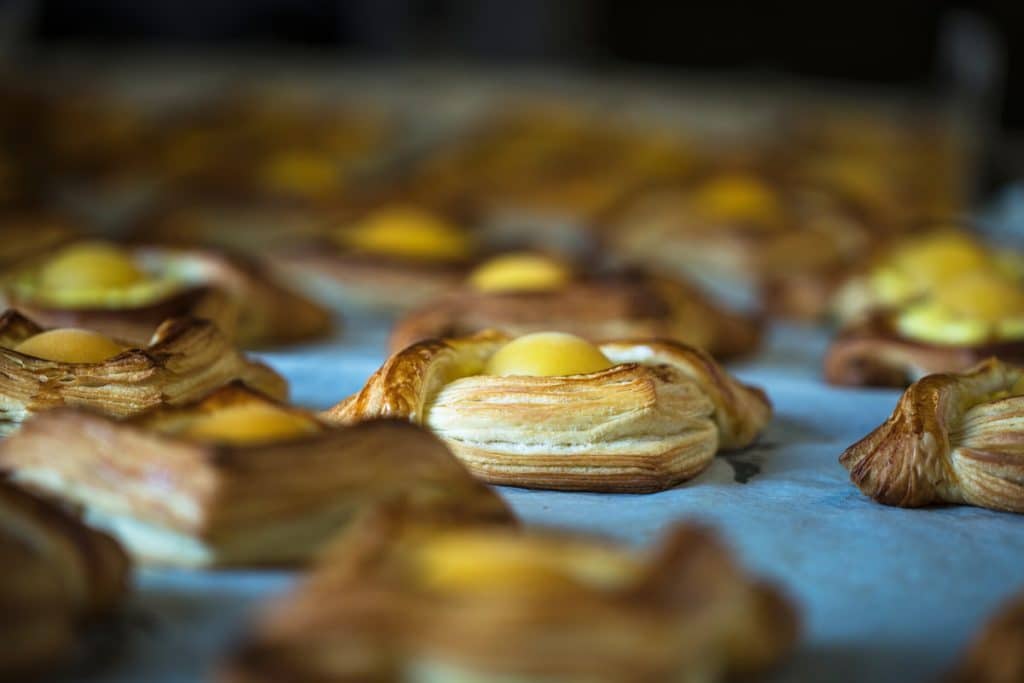
Flaky, golden and an icon of the French breakfast. Made using laminated dough, croissants involve folding butter into the mixture over several turns to create delicate, airy layers. Variations such as the pain au chocolat are equally beloved, prized for their rich, gooey centers and crisp, buttery exteriors.
Éclair
This long, filled pastry is made from pâte à choux, piped into shape and baked until light and hollow. Achieving the perfect rise and crispness relies on the careful balance of moisture and heat during baking, illustrating how understanding the science of cooking is crucial to pastry success.
Once cooled, the shell is filled with crème pâtissière or crème mousseline, then topped with a glossy glaze. As one of the most recognizable French desserts, the éclair remains a classic, with timeless variations that include coffee, vanilla and chocolate.
Mille-feuille
Also known as a Napoleon, this elegant dessert layers crisp puff pastry with crème pâtissière or crème mousseline, finished with fondant or a dusting of powdered sugar. Each bite offers a delicate contrast between flaky pastry and smooth filling, demanding precision, patience and a steady rolling pin.
Paris-Brest
Shaped like a wheel, this ring of pâte à choux filled with praline cream was created in 1910 to commemorate the Paris–Brest–Paris bicycle race. Its rich, nutty filling paired with a light, airy shell offers a refined take on cream-filled pastries, making it a standout in any French pâtisserie display.
Tarte Tatin
This upside-down apple tart caramelizes the fruit directly in the pan before being topped with pastry and baked. Once inverted, it reveals glossy, tender apples resting atop a crisp, buttery crust. Variations sometimes include additions such as cherry jam or crème de cassis to deepen the flavor and add a subtle twist to this rustic classic.
Religieuse
Resembling a nun’s habit, this elegant stacked choux pastry consists of two filled shells joined together and glazed with matching flavored fondant. Typically filled with coffee or chocolate crème pâtissière, the religieuse may have a whimsical name, but crafting it requires precision and skill, making it a true test for any trained French pastry chef.
Famous French pastry names and their origins
Some French pastries carry stories with them and their names often reflect their place of origin, shape or even a playful bit of humor.
Opera
Named after the Paris Opera, this elegant cake was said to have been created in the 1950s by pastry chef Cyriaque Gavillon, who wanted each layer to be perfectly visible in a single slice, like the rows in an opera house.
Baba au rhum
The name ‘baba’ is thought to come from Ali Baba, the character from One Thousand and One Nights, and was popularized by exiled Polish king Stanislas Leszczyński in the 18th century. He found his traditional kugelhopf too dry and had it soaked in rum, thus inventing the boozy, celebratory dessert we know today.
Canelé
This small pastry from Bordeaux has a name that simply means ‘fluted’, referencing its scalloped mold. Its origin is tied to 18th-century convents, where nuns used leftover egg yolks, discarded by winemakers who only needed egg whites to clarify wine.
Clafoutis
The name comes from the Occitan word clafir, meaning ‘to fill’, a nod to the way the cherries are nestled into the batter. While it may look refined, clafoutis originated in rural France as a farmhouse dessert and its name embodies the simplicity and honesty of its origins.
Galette des rois
This ‘cake of kings’ is eaten during Epiphany and contains a hidden trinket. The person who finds it in their slice is crowned king or queen for the day, a title that comes complete with a paper crown. It’s a joyful mix of tradition and play, rooted in ancient Roman customs and reinvented for modern French families.
French pastries can often reflect the regions from which they originate: in Alsace, sweet breads carry a Germanic influence; in Brittany, salted butter caramels reign supreme. And in Provence, sun-ripened fruits fill rustic tarts.
Across the country, pastry names are reflections of local pride, storytelling and centuries of culinary evolution. In every reputable French culinary school, students learn how to make these desserts and why they matter.
Legendary French pastry chefs
Behind these iconic desserts are chefs who shaped pastry history and elevated the craft into an art form. Each has left a mark that has inspired countless chef careers around the world.
Gaston Lenôtre
Renowned for lightening classic French pastries, Lenôtre created enduring desserts such as the Bûche de Noël (Yule log) and revolutionized pastry education by founding one of the first dedicated pastry schools.
Pierre Hermé
Famous for inventive flavor pairings such as rose, lychee and raspberry, Hermé redefined modern pâtisserie by pushing creative boundaries while honoring traditional techniques. His creations have become a benchmark for innovation in the pastry world.
Cédric Grolet
Celebrated for his hyper-realistic, fruit-shaped pastries, Grolet blends sculpture with culinary precision. His works often involve intricate layering, glazes and custom tools, transforming dessert into an optical illusion and edible art.
Christophe Adam
Best known for reinventing the éclair, Adam brought bold fillings, vibrant glazes and a sleek, modern aesthetic to this traditional pastry. His approach revitalized pâte à choux, merging classic technique with contemporary flair and creative chef skills.
French pastry techniques and tools
No matter how refined the recipe, the magic of French pastry depends on mastering technique and using the right tools. From dough preparation to decoration, precision is everything.
Essential techniques every pastry student learns
Mastering French pastry requires a solid foundation in core techniques. The following are among the most important skills taught early in training:
- Laminated dough: a fundamental skill for creating croissants and puff pastry, involving the folding of butter into dough to achieve flakiness. Used in mini croissants, Mont Blanc rolls and mille-feuille, this technique relies on cold butter, patience and clean folds
- Pâte à choux: a light, airy dough that puffs up in the oven, forming the base for éclairs and profiteroles. Getting the consistency right and knowing when to stop mixing is a key skill taught in professional pastry programs
- Crème pâtissière: a smooth, rich custard used to fill tarts, éclairs and choux buns. This classic is often transformed into crème mousseline by adding butter or is piped into fruit tarts as a creamy base
- Pâte brisée: a shortcrust pastry used for sweet and savory tarts. It’s tender yet sturdy enough to support custards, jams or fresh fruit layered with pastry cream
Key tools for precision
To execute these techniques with consistency and finesse, pastry chefs rely on essential equipment:
- A sturdy rolling pin: for evenly laminating dough and shaping crusts
- Piping bags: for controlled filling and precise decoration
- Pastry scraper: for portioning, shaping and lifting dough cleanly
- Proofing chambers: to regulate rise time and maintain uniform texture
- Molds and rings: for shaping delicate pastries such as crème caramel or macarons
Mastering these techniques and tools is essential for anyone serious about pastry. Whether you're starting with a baking and pastry arts course or advancing through a higher diploma in pastry arts, building confidence with the fundamentals lays the groundwork for creative growth, professional precision and success.
Studying French pastry
Programs at reputable institutes, such as the Bachelor's in French Pastry Arts at École Ducasse, provide a comprehensive education that combines technique, creativity and tradition. What distinguishes French pastry training is its unique balance of structure and artistry, combining classical foundations with modern innovation.
What you learn in French culinary schools
Training begins with mastering the fundamentals, including dough preparation, custards and classic dessert recipes. The curriculum then expands to include flavour pairing, visual design and modern plating. You’ll learn to craft perfect éclairs and plated desserts such as pot de crème, crème brûlée and Mont Blanc, each one refined and thoughtfully presented.
Students also develop an understanding of how to balance sweetness, acidity and texture. A lemon mousse on a crisp shortbread base, topped with candied zest, becomes a lesson in turning recipes into full sensory experiences.
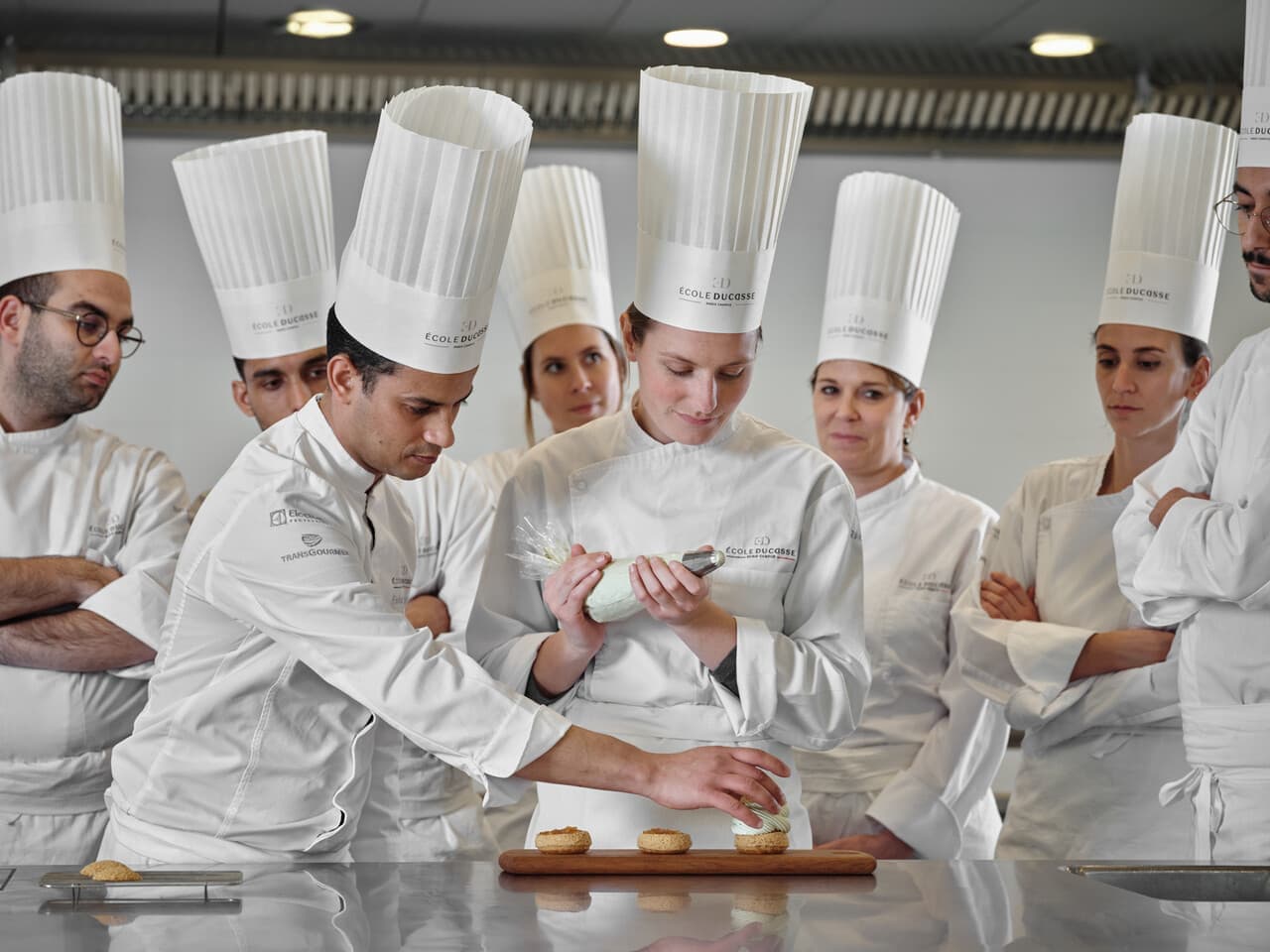
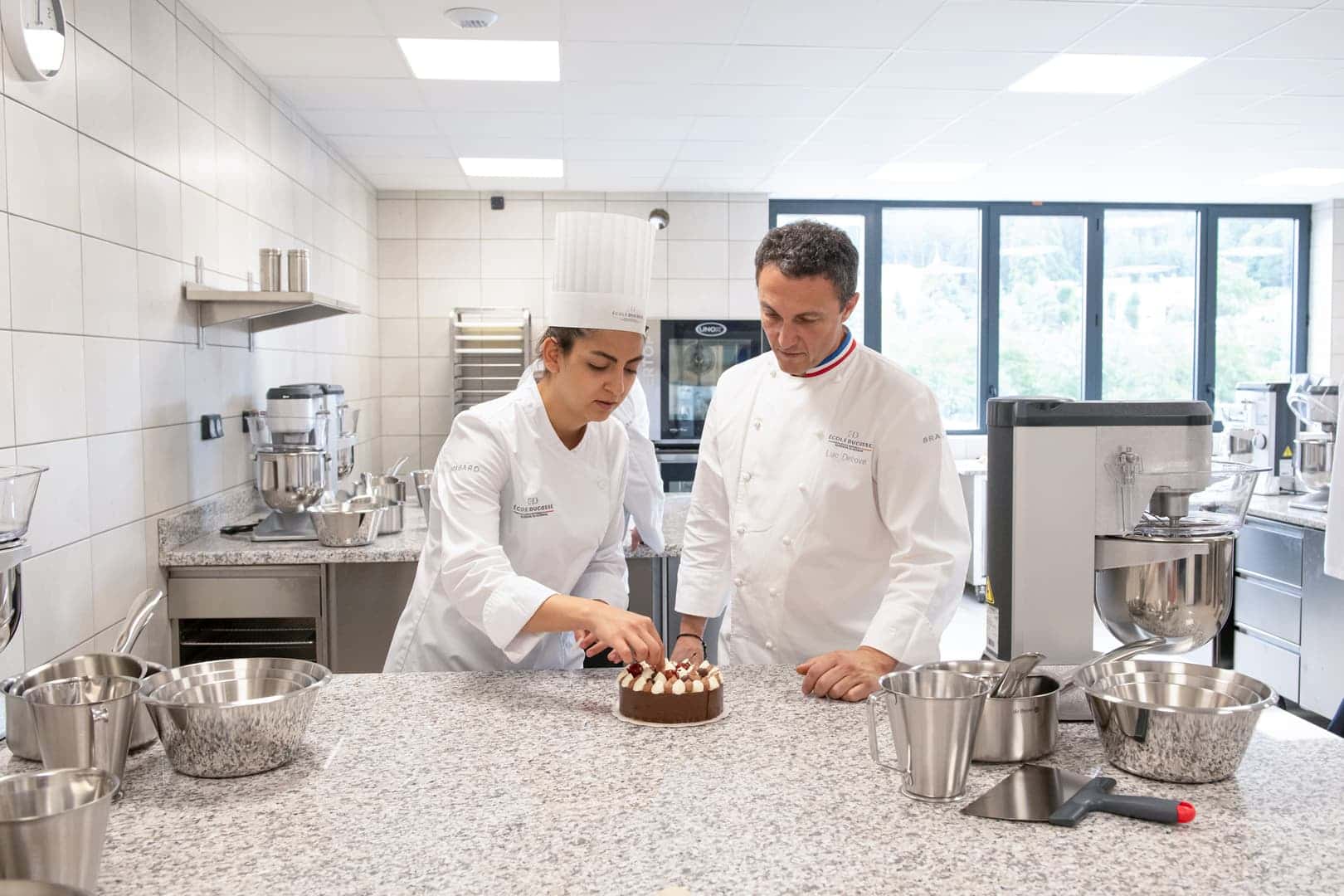
Hands-on practice happens in live kitchen labs, where students assemble tarts, pipe consistent designs and layer desserts with precision. Mistakes turn into lessons and repetition builds skill and confidence. The environment encourages experimentation. You’re taught to adapt traditional recipes with new ingredients or dietary alternatives, such as using plant-based options, natural sweeteners or global flavors.
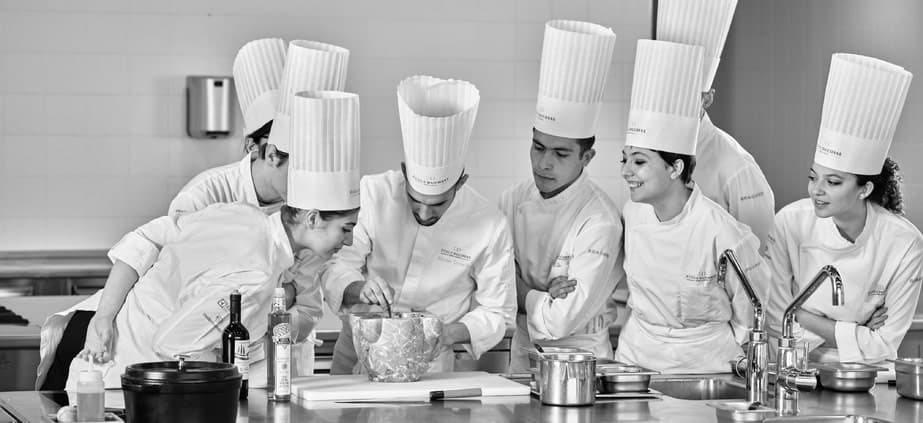
You also learn soft skills such as teamwork, adaptability and business communication skills, which are crucial for working in or managing high-functioning kitchen teams.
French culinary training begins with mastering the fundamentals—dough preparation, custards, and classic dessert recipes. The curriculum then expands to include flavor pairing, visual design, and modern plating techniques.
You’ll learn to create refined desserts such as éclairs, pot de crème, crème brûlée, and Mont Blanc, each crafted with precision and attention to detail. Students also develop an understanding of how to balance sweetness, acidity, and texture. A lemon mousse on crisp shortbread, topped with candied zest, becomes a lesson in turning technique into sensory experience.
Hands-on training takes place in live kitchen labs, where students practice assembling tarts, piping consistent designs, and layering desserts with care. Mistakes become learning opportunities, and repetition builds confidence.
The learning environment encourages creativity and adaptation. Students are taught to modify traditional recipes using new ingredients or dietary alternatives, including plant-based substitutions, natural sweeteners, and global flavors.
In addition to technical skills, students gain soft skills such as teamwork, adaptability, and business communication skills—essential for thriving in or managing a professional kitchen environment.
From tradition to innovation
Today’s pastry world mixes heritage with bold experimentation. Chefs are pushing boundaries through unexpected ingredients, minimalist aesthetics and global influences, all while honoring the traditions of French pastry.
Reinventing the classics
Some pastry chefs are breathing new life into time-honored desserts by playing with flavor, form and presentation:
- Pound cake: now appears in modern variations with flavors such as matcha, hibiscus or spiced orange
- Crème brûlée: might be infused with passionfruit or even paired with savoury elements such as black pepper
- Mont Blanc: reimagined with chocolate filling, citrus layers or sculpted formats including the Mont Blanc Roll
- Crème caramel: updated with infused flavours, layered textures or unexpected garnishes
- Swiss roll: transformed through artistic piping, bold colour palettes or globally inspired fillings
- Macarons: styled with edible gold, graphic designs or colour schemes influenced by fashion, paint swatches or digital aesthetics
Creative expression through presentation
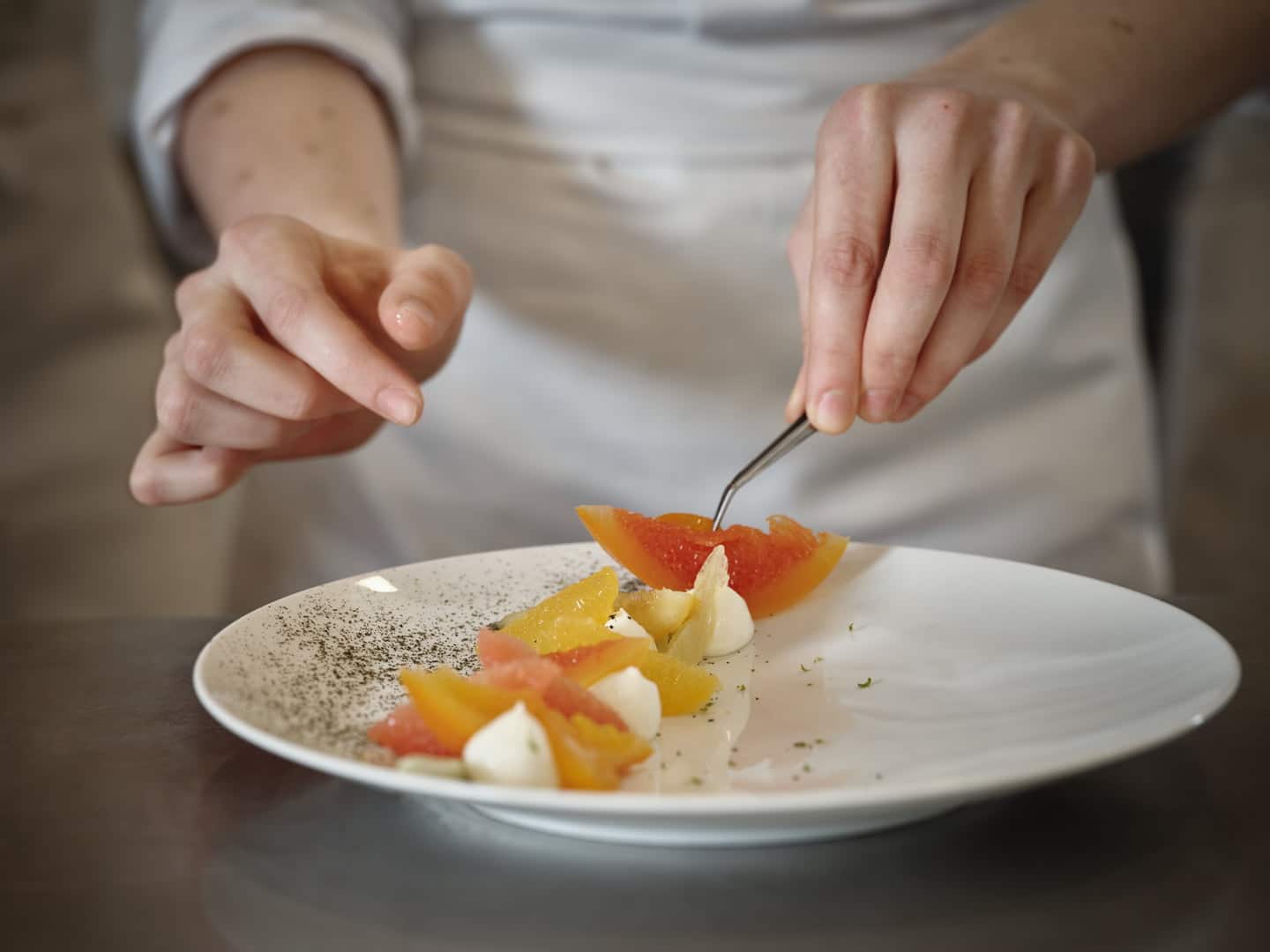
In modern pastry, presentation is as much a part of the experience as flavor. Chefs use color, texture and structure to guide how a dessert is seen and felt, often drawing inspiration from art, architecture or natural forms. Even plating choices and negative space play a role in shaping perception.
This visual approach encourages storytelling. A dessert may be glazed to look like polished marble, shaped into a delicate flower or designed to crack open and reveal a molten center or hidden layer of flavor. Through thoughtful design, chefs turn classic techniques into contemporary visual statements and unique, memorable experiences.
Conclusion
The legacy of French pastry is alive, constantly evolving and shaped by each new generation of chefs. While classic recipes date back centuries, they continue to inspire and be reimagined through innovation.
The craft has been developing with every advancement in technique and spark of creativity. Whether you're a beginner with big dreams or a seasoned pastry chef, you’re part of a living tradition and helping to carry it into the future.